

Filler Fatigue and Biostimulators: When the Strategy Needs to Evolve
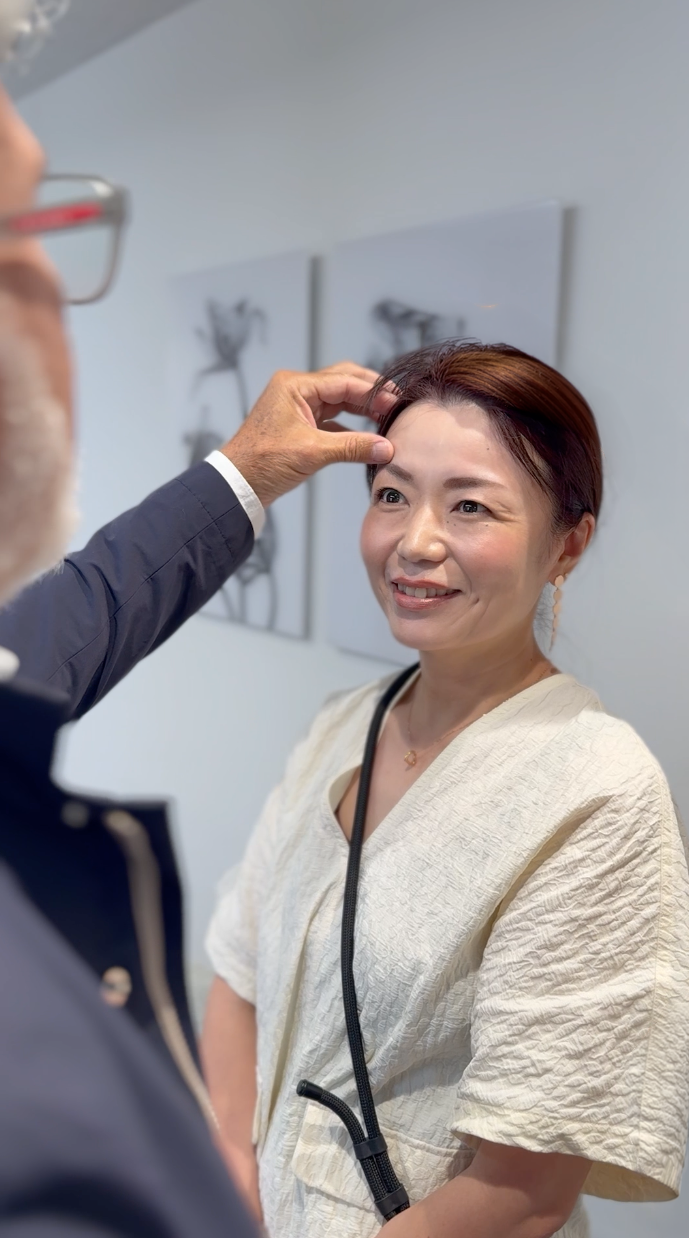
Dr. Mark Godley during a patient consultation.
“I keep adding filler and I still look tired.”
By this point, the usual concerns have already been treated. Hollowing has been improved. Lines have been softened. Volume has been restored.
And yet, the overall impression still feels tired. When that happens, the issue is often not the filler itself, but the overall strategy.
“This is the moment filler fatigue becomes apparent,” says Dr. Mark Godley. “The answer isn’t always more filler. It’s a better plan.”
What is filler fatigue?
Filler fatigue is not a complication, and it is not necessarily the result of poor technique. It is the result of continuing the same treatment approach while the face itself continues to change.
In the earlier stages of facial aging, volume loss is one of the most visible concerns. Hyaluronic acid fillers are excellent at restoring fullness and improving contour. Over time, however, aging involves more than volume depletion.
Bone gradually resorbs. Ligaments loosen. Collagen production declines. Skin becomes thinner and less resilient. When filler is layered into tissue that has weakened structurally, it can soften shadows but may not recreate the same degree of lift.
People may begin to notice:
• Volume stacking from repeated treatments
• A puffy or heavier midface
• Diminishing returns, where each syringe appears to make less difference
• Fullness that does not translate into definition
In these cases, filler has not failed. The strategy simply needs to evolve.
“More is not always better,” says Dr. Mark Godley. “Sometimes what’s missing isn’t volume. It’s strength.”
The Role of Biostimulators
Biostimulators work through a different mechanism. Rather than simply adding volume, they stimulate the body’s natural collagen production. Over time, this can improve tissue strength and firmness from within.
At Godley Clinic in Vancouver and Abbotsford, treatments such as Radiesse and Sculptra are used to support areas where structural weakening has occurred. Evangeline PRF, derived from your own blood, may also be used as part of a regenerative plan.
Think of biostimulators as reinforcing the framework of a building rather than adding furniture to the room. Traditional fillers can fill space and improve appearance on the surface. Biostimulators focus on strengthening the support system underneath.
How Biostimulators Fit Into an Overall Treatment Plan
For Dr. Mark Godley, the decision to use a biostimulator is never automatic. It begins with assessment. With 30 years in medicine and 10 years in aesthetic medicine, his background is grounded in anatomy and physiology as a specialist, anesthesiologist, and family doctor. Bone structure, ligament support, tissue thickness, and skin quality are evaluated before any treatment plan is created.
There is no magical age that suddenly means you need a different category of treatment. Some patients benefit from structural support earlier. Others may continue with selective filler for years. Rather than repeating the same approach year after year, Dr. Godley adjusts the strategy to reflect you and your aesthetic priorities. Much like having a primary physician who understands your medical history over time, there is value in working with a doctor who understands how your face has changed over the years.
Book your consultation in Vancouver or Abbotsford
If you are experiencing filler fatigue or wondering whether your current treatment plan still reflects your anatomy and skin health, a consultation is the next step.
Dr. Mark Godley offers personalized treatment planning at Godley Clinic in Vancouver and Abbotsford. During your consultation, your facial structure, tissue quality, and long term goals will be carefully assessed to determine whether biostimulators or a combination approach may be appropriate.
Biostimulators FAQ
What is Radiesse?
Radiesse is an injectable made of calcium hydroxylapatite microspheres suspended in a gel carrier. It provides structural support and also stimulates collagen production over time. Radiesse is commonly used in areas that benefit from firmer support, such as the jawline, lower face, and hands. Treatment plans are individualized based on anatomy and tissue quality.
What is Sculptra?
Sculptra is an injectable made from poly L lactic acid. Rather than creating immediate volume, it works gradually by stimulating the body’s natural collagen production. It is often used to improve overall facial firmness and structural support through a series of treatments spaced over time.
What is PRP?
PRP, or Platelet Rich Plasma, is derived from your own blood. After processing, the concentrated platelets are injected to support tissue repair and collagen production. PRP is commonly used to improve skin quality and texture and may be incorporated into a broader regenerative plan.
How are they different?
Radiesse, Sculptra, and PRP all stimulate collagen, but they differ in composition, placement depth, and treatment planning. The most appropriate option depends on your anatomy, tissue quality, and goals. A consultation is required to determine which treatment may be suitable for you.