

Botox Results Timeline: Understanding What Happens After Treatment
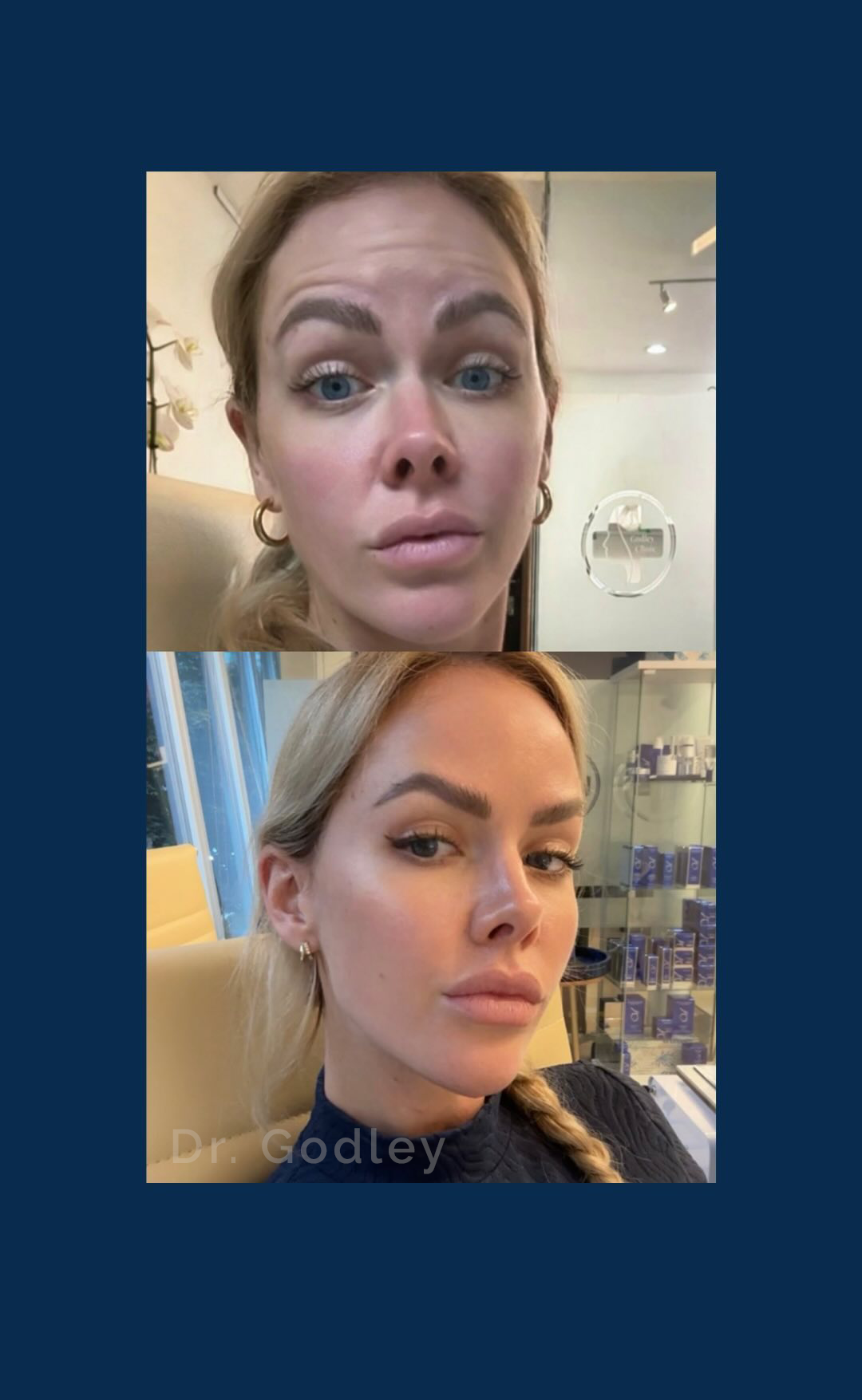
What does a neuromodulator treatment look like as it starts working? I documented my latest treatment to show you.
Dr. Godley treated my forehead, between my eyebrows and my chin. I wanted to soften the appearance of my lines while keeping enough movement to emote. I filmed updates on Day 2, Day 5 and Day 10 so you can see how the result developed rather than only seeing the final before and after.
One quick note: Botox is a brand of neuromodulator. Just as people say Kleenex when they mean facial tissue, Botox is often used as the familiar name for this type of treatment.
My experience shows how much can change over the first ten days, but everyone responds at their own pace! Below is a closer look at what can happen at each stage.
Immediately After Treatment
Your neuromodulator has been injected, but it has not started changing muscle movement yet. You will probably look about the same when you leave the clinic as you did when you arrived.
You might see small bumps or redness around the injection points. The bumps often flatten within 15 to 30 minutes, although some redness can remain when you leave the clinic.
Days One to Three: The First Changes
Your treatment is only beginning to take effect. Within the first three days, you might notice less movement when you frown, squint or raise your eyebrows. Lines created by these expressions also begin to soften. The changes are often subtle at this stage, and you can still have plenty of movement.
Days Four to Seven: Movement Continues to Soften
Between Days 4 and 7, the results become easier to see. When you frown, squint or raise your eyebrows, your face will not move as much as it did before treatment. As that movement decreases, your expression lines can begin to look softer.
Do neuromodulators make your face look frozen? A frozen appearance is not automatic. It can happen when too much movement is reduced or nearby muscles are affected. Dr. Godley assesses how your facial muscles move before choosing the dose and injection points, which helps preserve natural expression.
Why Can One Side Respond First?
The muscles in your face are not perfectly symmetrical, so one side can respond faster than the other. One eyebrow might retain more movement, or one side of your forehead can appear smoother at first. The other side might simply need more time.
Muscles can also compensate for changes in the surrounding area. As one muscle becomes less active, a nearby muscle may temporarily work harder, causing one side to lift higher or retain more movement. This unevenness often settles as the treatment takes effect.
Days Ten to Thirty: Your Full Result
By Days 10 to 14, you should see a clear reduction in movement and softer expression lines. Some neuromodulators continue developing over the following weeks, so your result may not be complete at the two week mark. Once your result has settled, Dr. Godley can assess the balance and how much movement remains.
What are the other types of neuromodulators? Botox is one brand. Other brands available in Canada include Dysport, Xeomin, Nuceiva and Letybo. Each has its own formulation and dosing, so the units and results timeline can vary.
Months One to Two: Your Results Are Maintained
During the following weeks the treated muscles remain less active, and lines caused by movement may continue to look softer. How much movement remains depends on your treatment plan. Some patients prefer subtle softening, while others want a greater reduction in movement.
Myth or Fact: Neuromodulators cause muscle atrophy? Because neuromodulators reduce muscle activity, the treated muscles can become smaller or weaker from being used less. This is called muscle atrophy. The amount varies with the muscle treated, dose and frequency of treatment. This is another reason Dr. Godley takes a conservative approach and considers how much movement you want to preserve.
The Following Months: Movement Gradually Returns
Neuromodulators are temporary. How long your result lasts depends on the product used, the treatment area, the dose, your muscle strength and your individual response.
Myth: Your wrinkles will look worse when you stop neuromodulator treatments. When your treatment wears off, your muscles gradually return to their previous activity. Your wrinkles do not suddenly become worse because you stopped treatment. They simply begin returning to how they looked before.
Why Might Your Results Wear Off Faster?
Several factors can affect how long your result lasts:
The product used
The treatment area
Your muscle strength
The dose
The amount of movement preserved
Your individual response
Your previous treatment history
Can you develop a tolerance to neuromodulators?
Tolerance means your body becomes used to a treatment, so it no longer works as well as it once did. Whether this happens with neuromodulators is debated. Some injectors believe the treatment only appears less effective because facial muscles can become stronger with age and require a different dose. Others believe that, as with medications such as allergy pills, the body can become less responsive over time and switching products may help. If your results change, Dr. Godley can assess the possible cause and adjust your treatment plan.
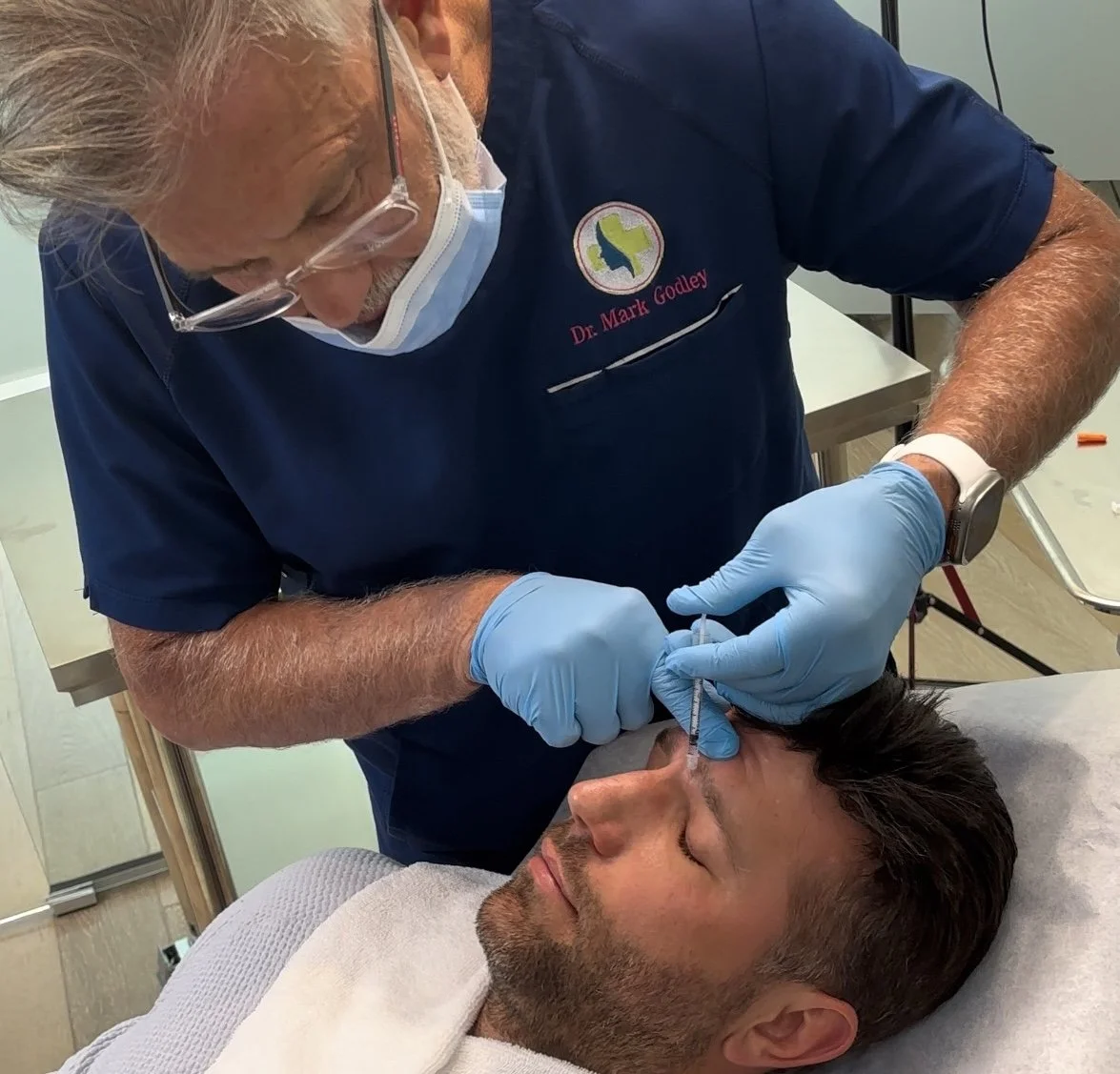
Book your Neuromodulator Consultation with Dr. Godley
So, what does a neuromodulator look like as it starts working? In my video, the change happens gradually over ten days. My lines soften and my movement decreases, but I can still emote and look like myself.
Your timeline may look different from mine. Give your treatment time to develop, and contact Dr. Godley and the team if you have questions as your results settle.
Book a consultation with Dr. Mark Godley at Godley Clinic in Vancouver or Abbotsford to learn whether a neuromodulator treatment is right for you.